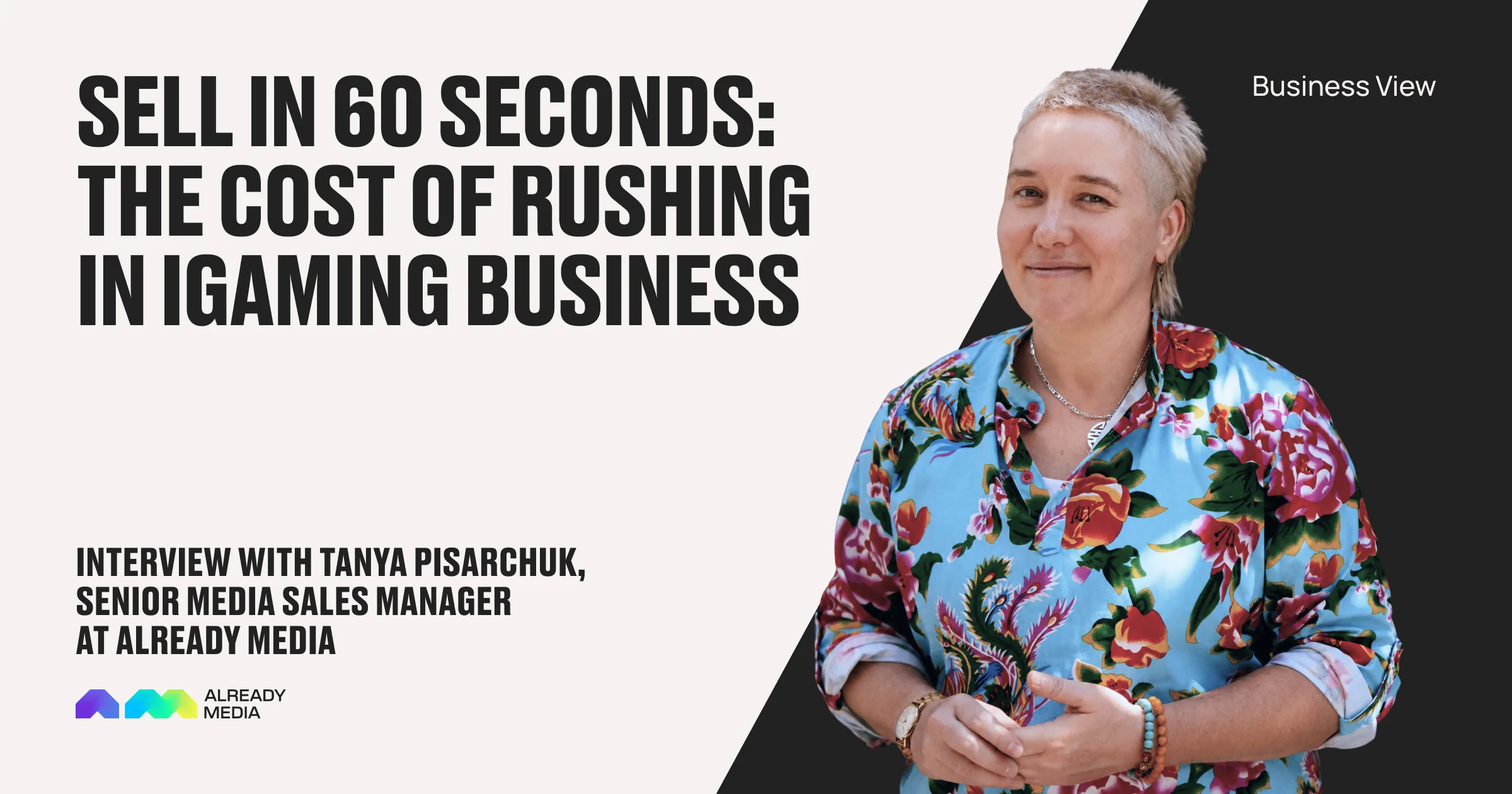
In iGaming, there’s no time to slow down. You test an offer, check the numbers, validate the GEO, and then move on. Whoever gets to market first usually takes both the volume and the money. But more and more often, this rush comes at a cost. Deals are closed before you fully understand the partner’s needs, before you’ve really figured out the product, before you’ve chosen the right tools. In this edition of Business View, Tanya Pisarchuk – Senior Media Sales Manager at Already Media – explains why “fast” no longer means “effective”, and what a quality partnership actually looks like today.
When Speed Starts Costing Money
How is the market evolving, and what do brands expect from partnerships today?
iGaming is still a magnet for people chasing fast money. You can even see this in small details, such as how quickly affiliate teams turn over. A typical situation: you meet a partner representative, start a chat, launch a campaign – and just a couple of weeks after the first payments, they disappear.
In the best-case scenario, you’re handed over to someone else. In the worst-case scenario, you’re ignored. However, some brands are starting to think differently. It’s no longer enough to launch quickly and hope for the best. Businesses want to understand their unit economics, how to scale, and if the partnership will be stable long term. Honestly, those are the clients you enjoy working with the most.
When does speed help the business, and when does it start working against it?
I don’t believe that “fast means good.” In fact, most bad decisions are made in a rush. I’ll go further and say that even proactivity can be misleading. Recently, I turned down a deal that looked great on paper. The client was engaged, asked the right questions, and was willing to pay well. But the more we talked, the more doubts emerged. Soon, all the small warning signs came together as one big red flag. It became clear that the client didn’t really know what they wanted. In real business, “Go there, I don’t know where” simply doesn’t work.
In the end, I had to walk away. It’s never an easy decision. But sometimes an uncomfortable decision now saves you from much bigger problems later and gives you peace of mind knowing you didn’t get pulled into something risky.
How do you maintain quality when a deal is “on fire” and should have launched yesterday?
In those situations, it’s often better not to launch at all. Because, ultimately, the responsibility is still yours. If something goes wrong, no one will look into the details. The client will simply say the performance wasn’t good and most likely won’t come back. That’s why I always insist on properly understanding the task first. Otherwise, it almost always results in wasted time and expensive rework.
What No One Talks About on Calls
How long does it take to evaluate a project, and what influences the process?
We don’t use scripts, universal formulas, or templated solutions. The sales team at Already Media always dives deep into each lead – their projects, goals, and challenges. If we reach out to you, it’s because we genuinely see how we can add value. Selling just for the sake of selling is a dead end. Smart salespeople know that and don’t work that way.
What risks have you seen when deals are closed too quickly, and how do they impact results?
The most dangerous client is one who doesn’t fully understand their needs. We don’t just work with traffic – we also work with the media. And that’s heavily tied to a brand’s marketing goals, such as testing hypotheses, retention, quick registrations, and especially brand awareness, which I talked about in a previous article. If these goals aren’t clearly defined from the beginning, it’s easy to choose the wrong tools and miss the desired outcome entirely. So, don’t be afraid to be honest with your sales manager. We’re professionals and will recommend the tools that actually fit your goals.
The Rules of a Good Deal
How do you move from test campaigns to long-term partnerships?
Even when we do everything right – deliver the right volume of traffic and reach the target audience – the brand may still not get the expected conversion. In those situations, you need to examine the product and offer. While we can highlight growth opportunities and suggest improvements, the final decisions always rest with the client.
What principles do you follow to build long-term relationships with brands?
I know how to listen – really listen. Before every meeting, I set a goal to see the situation through the client’s eyes and understand their challenge. That changes everything. Then, you’re not just selling; you’re offering a solution that actually works. Yes, money matters. But for me, it’s also about creating real value. That’s why my meetings often turn into honest conversations or brainstorming sessions. Clients appreciate that. Even if nothing comes of it immediately, they often come back later with new ideas and projects. In the end, we’re all human. We feel pressure, excitement, and uncertainty, both in life and at work. It’s important to me to stay genuine, support partners, and work through challenges together. That’s how relationships become strong. And that’s also why many of my clients end up becoming friends. They know they can rely on me when things get complicated.
What’s a high-quality sales process in iGaming today?
Numbers drive everything. Business is about money – if there’s a profit, then the system is working. However, the process is equally important: how quickly the team reacts, how transparent the agreements are, how issues are handled, and whether communication is smooth and stress-free. Everything should feel comfortable. That’s when relationships grow — and money follows.
Conclusion
You can close a deal quickly. You can push for better terms. You can agree to everything just to secure money here and now. But those decisions almost always have consequences: rebuilding from scratch, burned-out teams, broken relationships, and losses in the long run. Knowing when to pause and weigh the pros and cons takes skill and courage. When the choice is between a quick win with hidden risks and a system that works sustainably over time, we always choose the latter. For ourselves – and for our partners.